










How to Grow Oyster Mushrooms Commercially: A Step-by-Step Production Guide
Commercial oyster mushroom cultivation requires a systematic, industrialized approach to substrate preparation, environmental regulation, and facility automation. Because Pleurotus species exhibit rapid mycelial colonization and high biological efficiency, oyster mushroom farming offers a fast crop turnover compared to other cultivated mushrooms. Success at a commercial scale depends on maintaining strict process consistency across every production stage—from raw material mixing to harvest.
1. How Does Commercial Oyster Mushroom Cultivation Work?
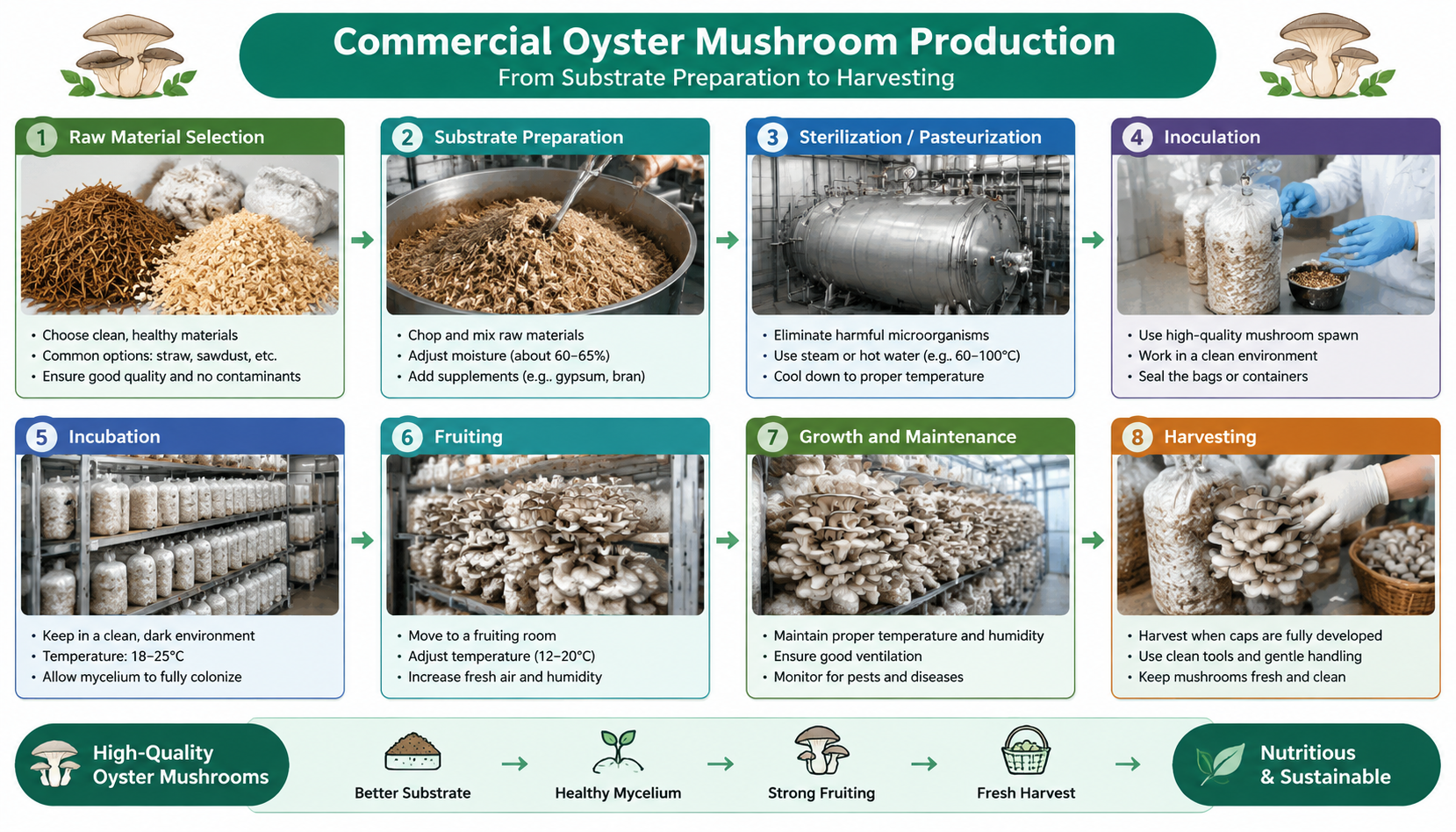
Commercial oyster mushroom production operates as a continuous or batch-controlled workflow designed to maximize biological efficiency while minimizing contamination risks. The production cycle transforms raw agricultural byproducts into marketable fruiting bodies through distinct phases: raw material conditioning, substrate mixing, bag filling, thermal sterilization, inoculation, spawn run incubation, and controlled fruiting room management.
2. What Raw Materials and Production Methods Are Commonly Used?
Oyster mushrooms are primary wood-decomposing fungi capable of utilizing a wide range of lignocellulosic materials. Selecting the right substrate formula dictates moisture retention, nutrient availability, and overall yield potential.
| Substrate Component | Typical Proportion (%) | Primary Function | Optimal Moisture Level |
|---|---|---|---|
| Cottonseed Hulls / Sawdust | 60% – 80% | Primary carbon and structural source | 60% – 65% |
| Wheat Straw / Rice Straw | 15% – 35% | Porosity and aeration support | 60% – 65% |
| Wheat Bran / Rice Bran | 1% – 5% | Nitrogen and nutrient supplementation | – |
| Gypsum (Calcium Sulfate) | 1% – 2% | pH buffering and flocculation | – |
Prior to bagging, raw ingredients must be thoroughly blended using heavy-duty substrate mixing equipment to ensure uniform moisture distribution and additive dispersion. Inconsistent moisture levels can create localized dry pockets or anaerobic zones during the subsequent sterilization phase.
Explore our raw material crushing machine.
3. Bag Filling, Sterilization, Inoculation, and Incubation
Once mixed, the substrate is compressed and packaged into high-density polyethylene (HDPE) or polypropylene (PP) cultivation bags. Utilizing an automated mushroom bagging machine ensures consistent bag density, proper neck insertion, and secure plugging, which are critical for mechanized handling.
Following bagging, substrates undergo thermal sterilization equipment (typically pressurized autoclaving at 121°C for 2 to 3 hours or atmospheric steam sterilization at 100°C for 8 to 12 hours) to eliminate competing molds and bacteria. After cooling to below 25°C, grain spawn is introduced under sterile laminar flow conditions. The inoculated bags are transferred to environmentally controlled dark incubation rooms where spawn run occurs at 24°C to 28°C with minimal fresh air exchange until fully colonized.
4. Fruiting Conditions and Harvest Timing
Fully colonized substrate blocks are moved into fruiting chambers where environmental parameters are adjusted to trigger primordia formation and subsequent mushroom development.
- Temperature: Maintained between 15°C and 22°C depending on the specific oyster strain (e.g., pearl, pink, or blue oyster).
- Relative Humidity: Kept at 85% to 95% using specialized misting or fogging systems.
- Fresh Air Exchange (FAE): Essential for controlling carbon dioxide (CO2) levels below 1,000 ppm to prevent elongated stems and underdeveloped caps.
- Lighting: 500 to 1,000 lux of indirect or LED spectrum lighting to guide directional cap development.
Harvesting must occur precisely when the margin of the mushroom cap is still flat or slightly rolled downward, just before the edges begin to turn upward and release spores. Commercial growers typically execute 2 to 3 productive flushes per bag before spent substrate is cleared out.
5. Equipment Needed for a Commercial Oyster Mushroom Farm
Scaling up from a manual setup to an industrial commercial farm requires integrated machinery to reduce labor intensity and maintain biological consistency across high-volume production cycles.
- Substrate Preparation Machinery: Industrial shredders, straw cutters, and industrial substrate mixing equipment for homogenous batch formulation.
- Bagging and Packaging Systems: Automated mushroom bagging machines with adjustable density controls and pneumatic sealing mechanisms.
- Sterilization Units: High-capacity horizontal autoclaves or bulk atmospheric steaming tunnels.
- Environmental Control Infrastructure: Automated HVAC systems, ultrasonic humidifiers, CO2 sensors, and positive-pressure clean air filtration units for inoculation rooms.
For operations looking to streamline facility deployment, exploring an integrated Oyster Mushroom Growing Solution provides coordinated engineering layouts that align machinery throughput with environmental room capacities.
6. Common Production Bottlenecks and FAQs
Commercial production can encounter specific operational hurdles that impact overall biological efficiency. Proper diagnosis helps prevent yield loss.
- Green Mold (Trichoderma) Contamination: Typically caused by incomplete sterilization, excessive substrate moisture, or contaminated spawn. Review thermal penetration times and spore filter integrity.
- Long Stems and Small Caps (Leggy Mushrooms): Caused by inadequate fresh air exchange and elevated CO2 concentrations inside the fruiting room. Increase ventilation frequency.
- Delayed Pinning: Triggered by sudden temperature fluctuations or insufficient light exposure during the induction phase.
Q: What is the typical production cycle duration for commercial oyster mushrooms?
A: From inoculation to the final harvest of the third flush, a standard production cycle takes approximately 45 to 60 days, depending on strain characteristics and incubation temperatures.
Q: How can farm operators minimize contamination rates during bagging?
A: Maintaining cleanroom standards in the inoculation area, utilizing pathogen-free raw materials, and ensuring precise sterilization temperature cycles are the most effective preventive measures.
If you have more questions, write to us
Recommend News
How to Grow Lion’s Mane Mushrooms: A Commercial Bag-Cultivation Guide
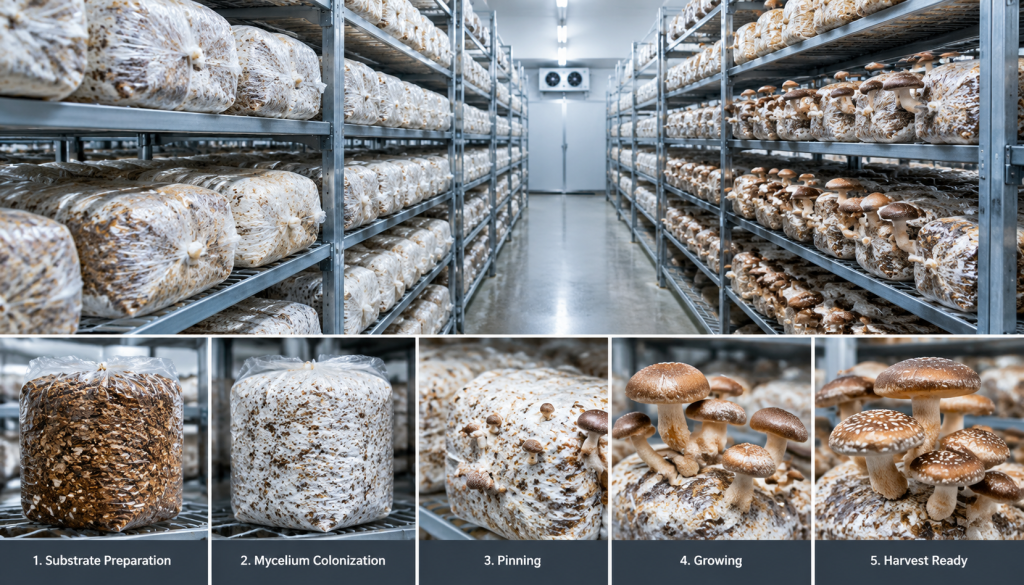
Shiitake Mushroom Growth Stages: Spawn Run, Browning, Fruiting, and Harvest
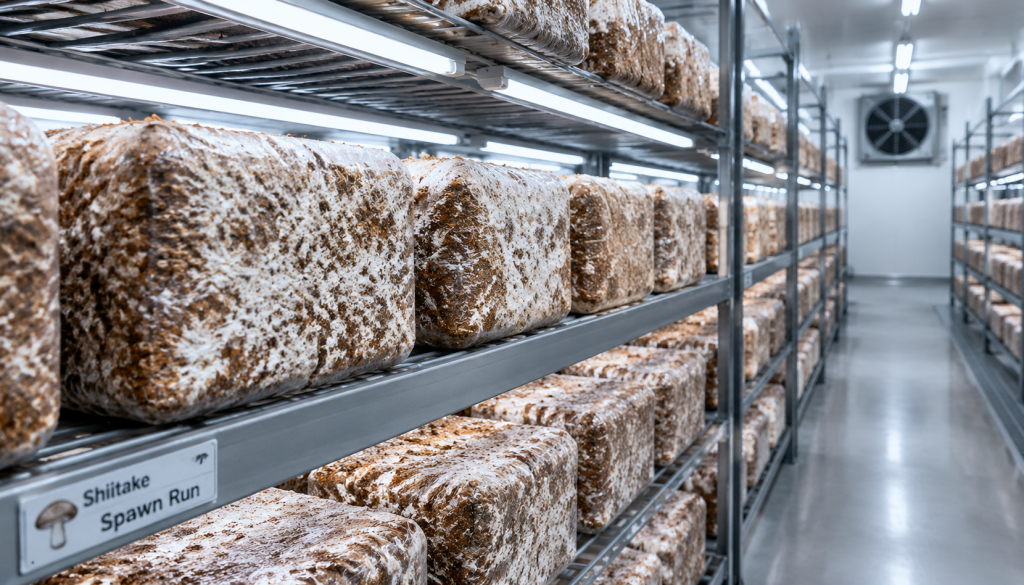
Best Substrate for Shiitake Mushrooms: Hardwood Sawdust, Supplements, and Bag Preparation
NTU Singapore Partners with Japanese Firm to Develop Fungal Fermentation Technology for High-value Upcycling of Okara
Agri-tech Empowers Specialty Farming: Indian Farmers Achieve Steady Income Growth Through the Edible-mushroom Industry
New Innovative Shiitake Cultivation Technology in Morioka, Japan Improves Quality and Production Efficiency
Shiitake Mushroom Spawn Run Guide
How to Preserve and Process Shiitake Mushrooms: A Practical Guide