











Raw Material Mixing Equipment for Mushroom Substrate Preparation
Combine substrate materials and water before filling, sterilization, and inoculation with mushroom compost turners and substrate mixers designed for different production capacities and processing methods.
Mixing • Turning • Water Addition
What Production Stage Does Mushroom Mixing Equipment Support?
Raw material mixing is a critical stage in mushroom substrate preparation. Different substrate materials and water are combined before filling, sterilization, and inoculation.
The basic workflow is raw material feeding → mixing or turning → water addition when required → discharge → bag filling or further substrate processing.
Raw Material Feeding
Mixing or Turning
Water Addition
Substrate Discharge
What Types of Mushroom Mixing Equipment Are Available?
Mushroom Raw Material Mixing Equipment includes two main categories: Mushroom Compost Turners for larger-volume pile turning and Mushroom Substrate Mixers for controlled batch mixing.
TUXH8000B Electric Windrow Turner
TUXH8000A Gantry Compost Turner for Mushroom Cultivation
TUXH2MA Gantry Compost Turner
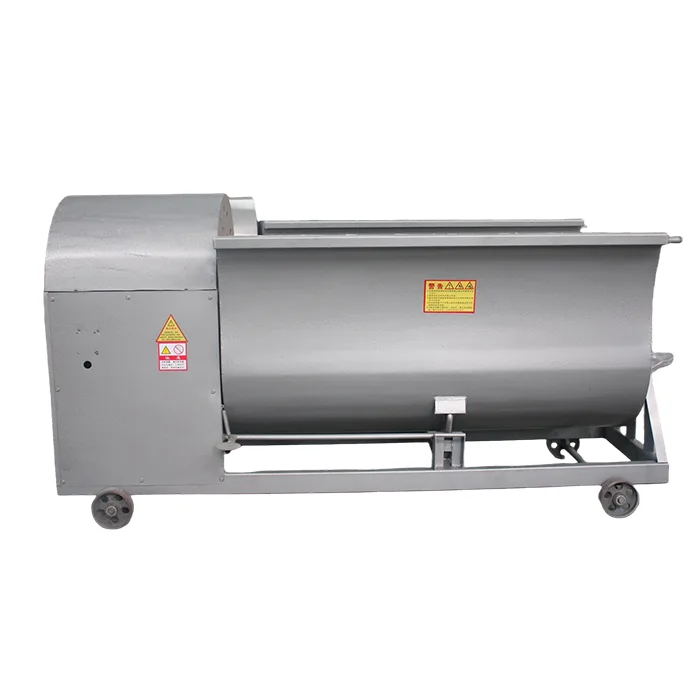
MIXH200A Mushroom Substrate Mixer
What Production Stage Does Raw Material Mixing Equipment Support?
The four representative models cover two turning systems and two batch-mixing structures.
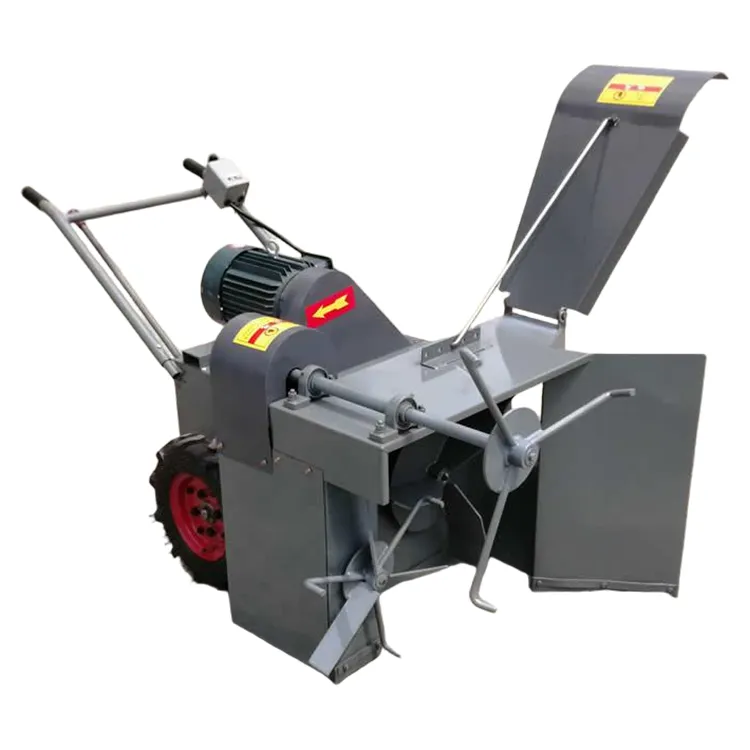
Self-Propelled Walk-Behind Compost Turner
The self-propelled walk-behind model is designed for compact operation and high stated throughput. It can be operated by one operator.
- Power: 3 kW
- Voltage: 220/380 V
- Capacity: >5,000 kg/h
- Weight: 178 kg
- Dimensions: 118 × 108 × 85 cm
- Operation: 1 operator
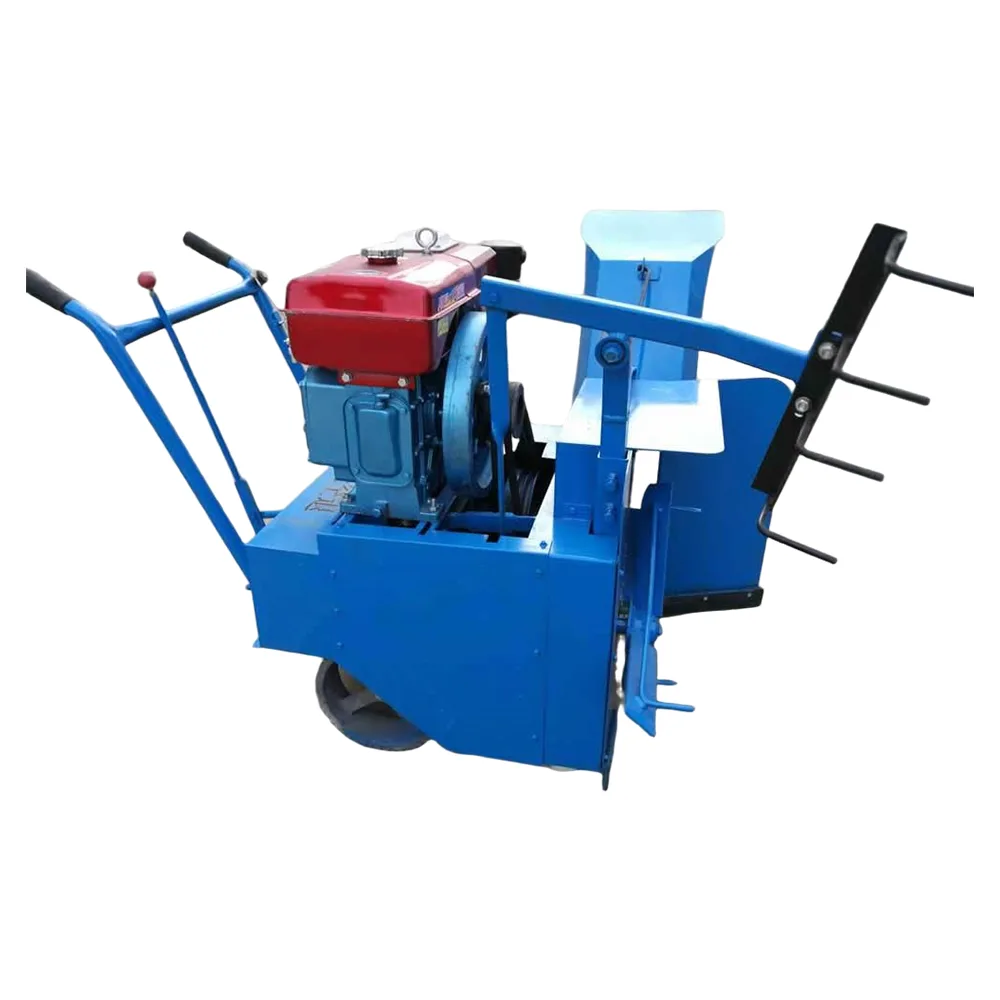
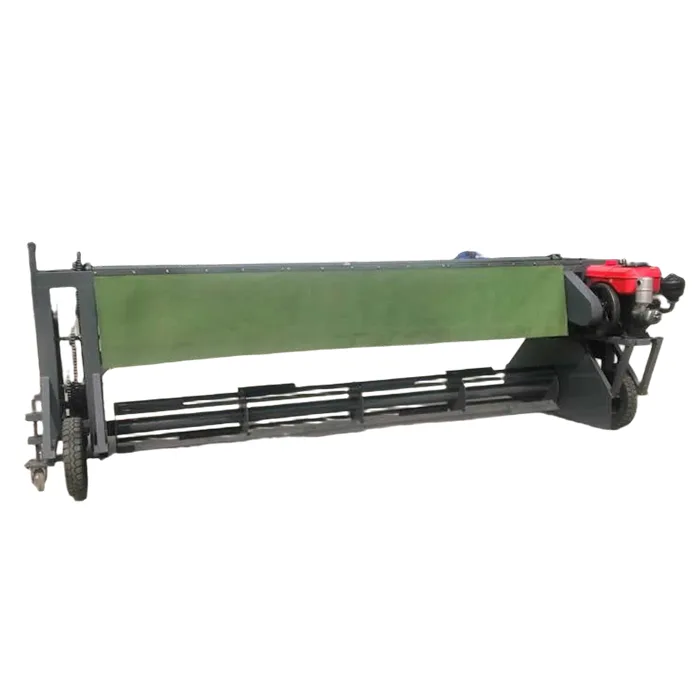
Gantry Compost Turner
The Gantry Compost Turner is designed for larger substrate piles and farm-scale preparation. It provides a 2 m working diameter and motorized travel.
- Main motor: 5.5 kW
- Travel motor: 0.75 kW
- Voltage: 380 V
- Weight: 500 kg
- Dimensions: 275 × 135 × 150 cm
- Working diameter: 2 m
Tilting Hopper Substrate Mixer
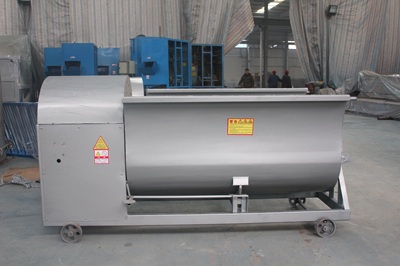
The Tilting Hopper Substrate Mixer uses an arc-shaped mixing trough and dual-bearing structure for controlled batch substrate mixing.
- Power: 4 kW
- Voltage: 380 V
- Capacity: 180 kg/batch
- Weight: 380 kg
- Dimensions: 275 × 90 × 110 cm
Side-Discharge Substrate Mixer
The Side-Discharge Substrate Mixer uses a motor-and-gearbox drive and solid steel-strip auger for granular substrate preparation.
- Power: 4 kW
- Voltage: 380 V/50 Hz
- Capacity: 300 kg/batch
- Cycle time: 8 minutes
- Weight: 480 kg
- Dimensions: 229 × 88 × 116 cm
Which Mushroom Cultivation Applications Can These Machines Support?
These machines can be incorporated into substrate preparation processes for oyster mushroom, shiitake mushroom, king oyster mushroom, and other cultivated edible fungi, depending on the substrate formulation used by the farm.
For sawdust-based cultivation, substrate mixers and compost turners can help combine sawdust with other ingredients and distribute moisture before the substrate is filled into cultivation bags.
For substrate formulas using corn cobs or cottonseed hulls, the mixing equipment can be used for granular substrate preparation.
King oyster mushrooms and other cultivated edible fungi can also use prepared substrate materials according to their individual cultivation formulas.
Suitable Production Scales
- Small mushroom farms
- Medium farms
- Larger farms
- Higher-automation production
Smaller farms can use the compact walk-behind turner or 180 kg/batch tilting mixer with manual feeding.
Medium farms can use the 300 kg/batch side-discharge mixer for repeated production cycles.
Larger farms can use the Gantry Compost Turner for larger substrate piles.
Higher-automation production can integrate mixing equipment with raw-material crushers, conveyors, bagging machines, and sterilization systems.
How Should You Choose the Right Mushroom Mixing Equipment?
The main distinction is between batch mixing and pile turning. Selection should also consider capacity, raw material type, moisture addition, working area, power supply, labor requirements, and downstream equipment capacity.
For Controlled Batch Mixing
For Larger Substrate Piles
The Self-Propelled Walk-Behind Compost Turner emphasizes compact operation and high stated throughput.
For Integrated Production
Selection Factors
When selecting a model, compare: Required capacity, Raw material type, Substrate formula, Moisture-addition method, Working area, Available voltage, Labor requirements, Downstream bagging capacity.
Connect Mixing Equipment with Your Mushroom Substrate Production Line
Raw material mixing is positioned between raw material preparation and bag filling or further substrate processing.
The equipment can operate as part of a complete mushroom substrate preparation workflow.
Typical Process Flow
For higher-automation production, mixing equipment can be integrated with raw-material crushers, conveyors, bagging machines, and sterilization systems.
The selected equipment should match the capacity and workflow of the other substrate-processing machines.
Can Raw Material Mixing Equipment Be Customized?
The equipment can be configured according to the customer’s raw materials, required capacity, working dimensions, power supply, and production process.
- Raw material type
- Required capacity
- Working dimensions
- Power supply
- Mixing method
- Discharge arrangement
- Production process
- Integration with the complete substrate production line
The Gantry Compost Turner’s 2 m working diameter can be customized according to project requirements.
Different mixer configurations provide different batch capacities and discharge arrangements.
Applicable Power & Capacity
The available equipment includes configurations using 220 V, 380 V, and 380 V/50 Hz power supplies.
The available capacities include:
- >5,000 kg/h for the Self-Propelled Walk-Behind Compost Turner
- 180 kg/batch for the Tilting Hopper Substrate Mixer
- 300 kg/batch for the Side-Discharge Substrate Mixer
Tell Us About Your Mushroom Substrate Preparation Process
Send us your raw material composition, target capacity, required mixing method, available power supply, installation space, and intended mushroom cultivation process.
These details help determine whether a Self-Propelled Walk-Behind Compost Turner, Gantry Compost Turner, Tilting Hopper Substrate Mixer, or Side-Discharge Substrate Mixer is appropriate for your production workflow.