










How to Grow Lion’s Mane Mushrooms: A Commercial Bag-Cultivation Guide
Commercial lion’s mane mushroom cultivation relies on a controlled, repeatable sequence involving sawdust-based substrate preparation, precise sterilization, grain spawn inoculation, dark incubation, and strict environmental regulation during the fruiting phase. By utilizing specialized grow bags and automated handling equipment, commercial producers can achieve high biological efficiency and uniform yields.
1. How Do You Grow Lion’s Mane Mushrooms in Bags?
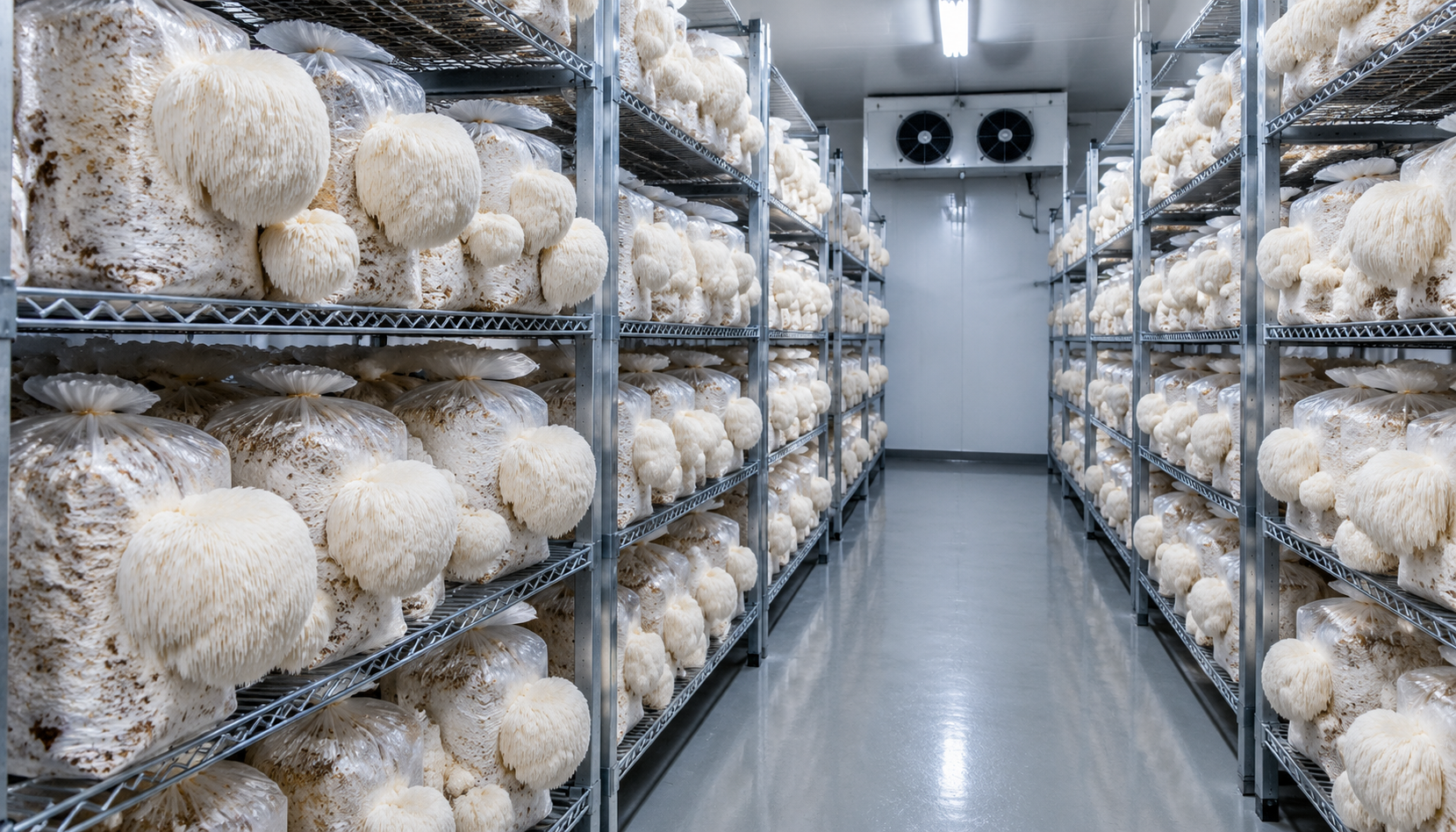
Growing lion’s mane mushrooms (Hericium erinaceus) in bags is the preferred method for commercial facilities aiming for high space utilization and contamination control. The complete production cycle spans approximately 4 to 6 weeks from inoculation to the first harvest. The process begins with mixing hardwood sawdust and nutritional supplements to an optimal moisture level, packing the mixture into polypropylene grow bags using a mechanical bagging machine, and steam-sterilizing the units. Once cooled, the bags are inoculated with quality grain spawn, allowed to colonize in a dark incubation room, and finally transferred to a specialized fruiting chamber where humidity, temperature, and fresh-air exchange (FAE) are meticulously managed.
2. Substrate and Bag Preparation
Substrate formulation forms the nutritional foundation for successful lion’s mane mushroom cultivation. Because this species is a wood-rotting white-rot fungus, hardwood sawdust serves as the primary bulk ingredient.
Standard Substrate Formula and Moisture Control
A standard commercial substrate formula typically consists of 80% to 85% hardwood sawdust (such as oak, beech, or maple), supplemented with 15% to 20% wheat bran or rice bran to provide essential nitrogen. Water is added to adjust the total moisture content to between 60% and 65%. Thorough mixing is critical to prevent dry pockets that resist mycelial colonization.
Bagging and Sterilization Parameters
Prepared substrate is packed into heat-resistant polypropylene (PP) cultivation bags featuring micro-filter patch ports for gas exchange. Commercial facilities generally utilize an automated mushroom bagging machine to ensure consistent density and weight across all units. Following bagging, substrates must undergo sterilization—typically in a commercial autoclave or retort at 121°C (250°F) at 15 psi for 120 to 150 minutes—to eliminate competing molds and bacterial spores before inoculation.
3. Inoculation and Incubation
Successful lion’s mane mushroom cultivation requires strict sanitary protocols during the transfer of spawn to the sterile substrate.
Inoculation Procedure
After sterilization, bags must cool down completely to below 25°C (77°F). Inoculation is performed in a positive-pressure laminar flow hood or a dedicated clean room using specialized inoculation equipment. Grain spawn (typically rye, millet, or sorghum colonized by Hericium erinaceus mycelium) is added at a rate of 2% to 4% of the wet substrate weight. The bags are then sealed using heat sealers equipped with filter patches.
Spawn Run Conditions
Inoculated bags are moved to the incubation room for the spawn run phase. Recommended conditions include:
- Temperature: 21°C to 24°C (70°F to 75°F) substrate temperature.
- Relative Humidity: 60% to 70% in the ambient room.
- Lighting: Dark or very low ambient light.
- Duration: 18 to 25 days, depending on bag size and spawn vigor, until the substrate is entirely white with dense mycelium.
4. Primordia Induction and Fruiting Conditions
Transitioning from the vegetative growth stage to fruiting requires altering environmental triggers to initiate primordia (pinhead) formation.
| Growth Stage | Temperature | Relative Humidity (RH) | CO2 Concentration | Lighting |
|---|---|---|---|---|
| Substrate Preparation | N/A | 60-65% (Moisture) | N/A | N/A |
| Incubation (Spawn Run) | 21°C – 24°C | 60% – 70% (Room) | > 5,000 ppm | Dark / Minimal |
| Primordia Induction | 16°C – 20°C | 90% – 95% | < 1,000 ppm | 500 – 1000 lux |
| Fruiting & Development | 18°C – 22°C | 85% – 90% | 600 – 900 ppm | 500 – 1000 lux |
When growing lion’s mane mushrooms in bags, growers typically slit the plastic bag or open a patch window once full colonization is achieved. Lowering the temperature, increasing fresh-air exchange to keep carbon dioxide levels below 1,000 ppm, and introducing indirect LED lighting (500 to 1000 lux) triggers the formation of white, coral-like primordia.
5. When to Harvest Lion’s Mane Mushrooms
Timing the harvest correctly ensures optimal flavor, texture, and market value for commercial operations.
Key Visual and Physical Indicators
- Tooth Length: The characteristic cascading spines (teeth) should measure between 0.5 cm and 1.5 cm long. Harvesting before teeth become overly elongated or rubbery is essential.
- Color: The fruiting body should be bright, pure white. A transition to yellowish or brownish hues indicates over-maturation and spore drop, which diminishes culinary quality.
- Firmness: The fruit body should feel firm and fleshy when gently squeezed, rather than soft or spongy.
Harvesting is executed by cutting the entire cluster cleanly away from the bag surface using a sharp sterile knife or scalpel, minimizing residual stem tissue that could invite post-harvest contamination.
6. Common Problems and FAQs
Commercial production can encounter environmental or operational challenges. Addressing these issues promptly protects overall farm yield.
Troubleshooting Cultivation Issues
Stunted or Coral-less Growth: If developing mushrooms look like smooth, round blobs without teeth, carbon dioxide levels are generally too high. Increase fresh-air exchange rates immediately.
Dry, Yellowing Spines: Caused by relative humidity dropping below 80% or excessive direct airflow across the fruiting clusters. Adjust misting intervals and check HVAC baffle settings.
Green Mold (Trichoderma): Typically stems from incomplete substrate sterilization or compromised bag seals during the incubation phase. Review autoclave temperature logs and bag integrity.
Frequently Asked Questions
How many flushes can be harvested from a single lion’s mane grow bag?
Commercial operations typically harvest 2 successful flushes from each bag. The second flush generally yields 30% to 40% less than the first and occurs roughly 14 to 21 days after the initial harvest.
What is the ideal substrate pH for lion’s mane mushroom cultivation?
Lion’s mane thrives in a slightly acidic to neutral substrate environment, with an optimal pH range between 5.5 and 6.5 prior to sterilization.
If you have more questions, write to us
Recommend News
Shiitake Mushroom Growth Stages: Spawn Run, Browning, Fruiting, and Harvest
Best Substrate for Shiitake Mushrooms: Hardwood Sawdust, Supplements, and Bag Preparation
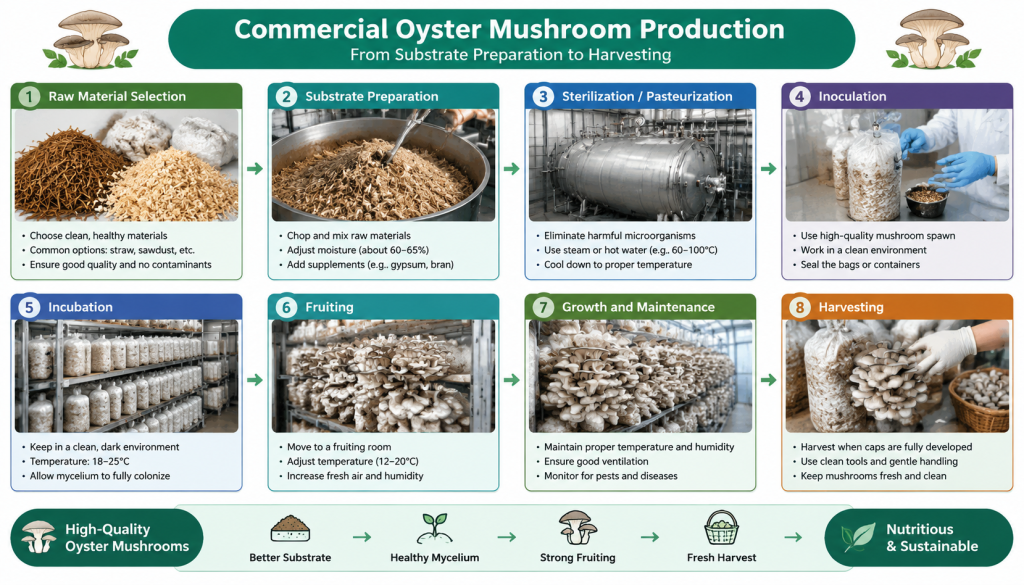
How to Grow Oyster Mushrooms Commercially: A Step-by-Step Production Guide
NTU Singapore Partners with Japanese Firm to Develop Fungal Fermentation Technology for High-value Upcycling of Okara
Agri-tech Empowers Specialty Farming: Indian Farmers Achieve Steady Income Growth Through the Edible-mushroom Industry
New Innovative Shiitake Cultivation Technology in Morioka, Japan Improves Quality and Production Efficiency
Shiitake Mushroom Spawn Run Guide
How to Preserve and Process Shiitake Mushrooms: A Practical Guide