










Best Substrate for Shiitake Mushrooms: Hardwood Sawdust, Supplements, and Bag Preparation
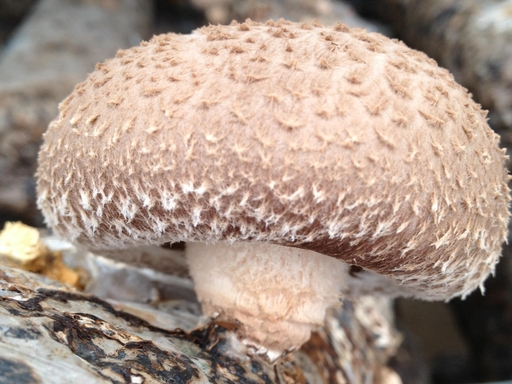
The best substrate for shiitake mushrooms (Lentinula edodes) is a formulated blend of non-oily hardwood sawdust and nutrient-rich nitrogen supplements that replicates the composition of decaying broad-leaved trees. Because shiitake is a primary white-rot wood-decay fungus, commercial production systems rely heavily on synthetic sawdust blocks to achieve high biological efficiency, uniform colonization, and predictable flush cycles. Selecting and preparing the proper substrate formula directly dictates mycelial run speed, contamination resistance, and overall commercial yield.
1. What Is the Best Substrate for Shiitake Mushrooms?
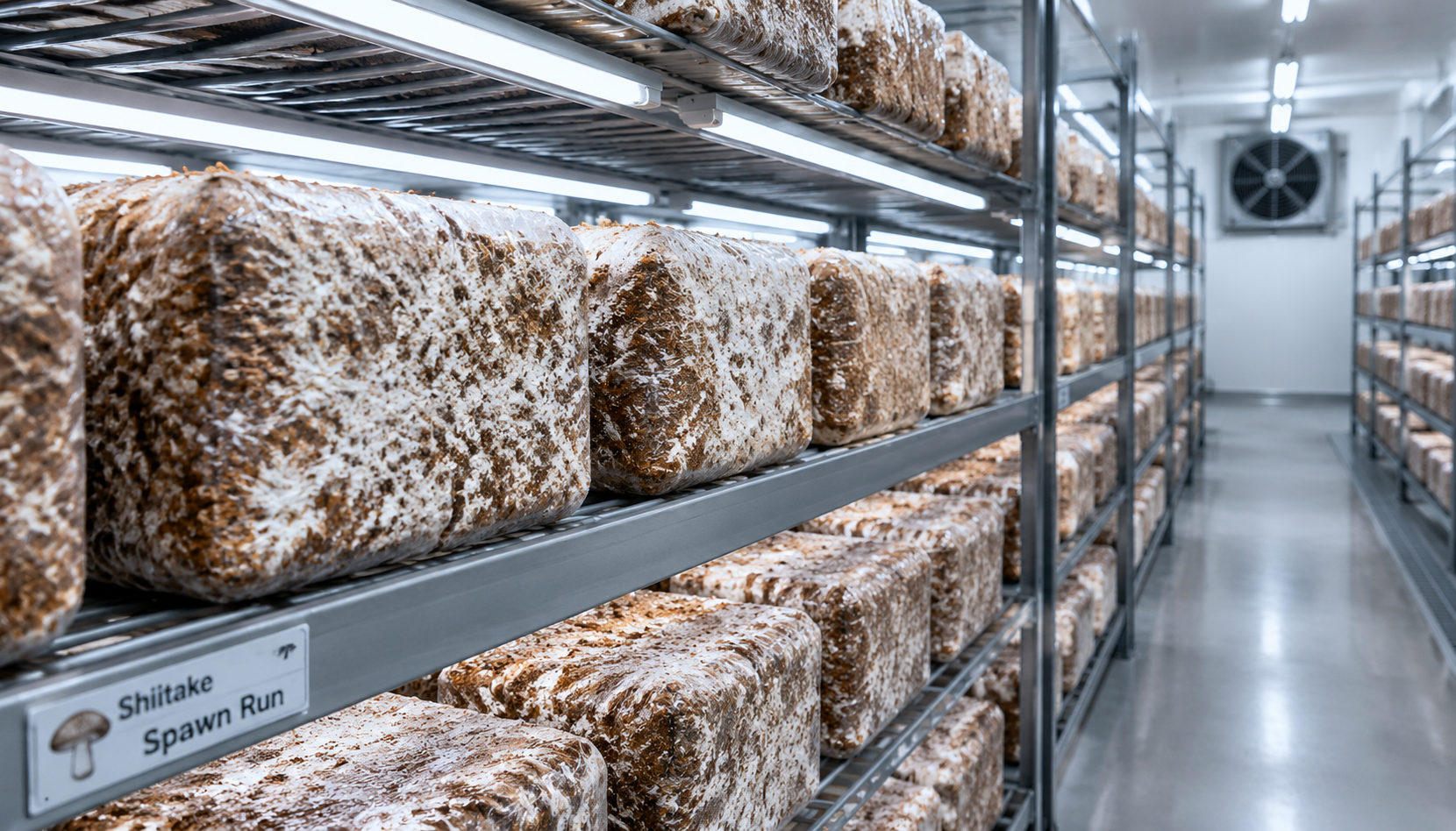
The ideal substrate for commercial shiitake cultivation provides a balanced carbon-to-nitrogen (C:N) ratio, adequate structural porosity for gas exchange, and moisture retention capacity tailored to bagged or bottled production systems. While wild strains colonize natural hardwood logs over several years, modern commercial operations utilize formulated sawdust substrates inside specialized polypropylene cultivation bags. This controlled environment reduces the production cycle to just a few months while maintaining stringent quality control standards.
2. Why Hardwood Sawdust Is Commonly Used
Hardwood sawdust serves as the primary carbon and structural foundation for shiitake cultivation. Shiitake mycelium produces specialized extracellular enzymes—such as lignin peroxidase and laccase—that break down the complex lignin and cellulose polymers found in hardwood species. Softwoods, by contrast, contain high levels of natural resins and terpenes that inhibit mycelial growth and encourage bacterial contamination.
Preferred hardwood varieties include oak, maple, beech, hornbeam, and eucalyptus. Oak is widely considered the industry benchmark due to its dense lignin structure and sustained nutrient release, which supports robust fruiting bodies over multiple flushes. Farm operators often utilize a sawdust crusher to process raw lumber mill waste down to uniform particle sizes, ensuring consistent moisture absorption and optimal packing density inside cultivation bags.
3. Wheat Bran, Rice Bran, and Other Supplements
While hardwood sawdust supplies ample carbon, it lacks sufficient nitrogen to fuel rapid mycelial colonization and high-density fruiting. Commercial growers add targeted nitrogen and mineral supplements to enrich the base material. Below is an example of a standard baseline formulation used in many commercial facilities, though operators must adjust ratios based on local material availability, strain requirements, and sterilization capabilities.
| Ingredient | Percentage (Dry Weight) | Primary Function |
|---|---|---|
| Hardwood Sawdust | 75% – 85% | Primary carbon source and structural matrix |
| Wheat Bran or Rice Bran | 15% – 20% | Nitrogen, protein, and lipid supplement |
| Gypsum (Calcium Sulfate) | 1% – 2% | Provides calcium and sulfur; buffers pH |
| Calcium Carbonate (Optional) | 0.5% – 1% | Fine-tunes initial substrate pH |
Note: This formulation serves as a reference baseline and does not represent a universally applicable recipe. Specific strains, regional wood types, and environmental control capacities require farm-specific formulation adjustments. Over-supplementing with nitrogen above 25% significantly increases the risk of green mold (Trichoderma) outbreaks during the spawn run.
4. Shiitake Substrate Moisture and pH
Managing precise moisture content and pH levels is critical before bagging and sterilization take place. Substrate moisture directly influences gaseous exchange and intracellular nutrient transport during mycelial colonization.
- Target Moisture Content: 60% to 65% on a wet-weight basis. Insufficient moisture below 55% stunts mycelial expansion, while moisture exceeding 70% creates anaerobic pockets that suffocate the culture and promote bacterial blotch.
- Target pH Range: 5.5 to 6.5. Shiitake mycelium prefers a slightly acidic environment. Calcium carbonate and gypsum are blended using a commercial horizontal substrate mixer to ensure uniform pH distribution across large batches.
5. How to Prepare and Fill Shiitake Bags
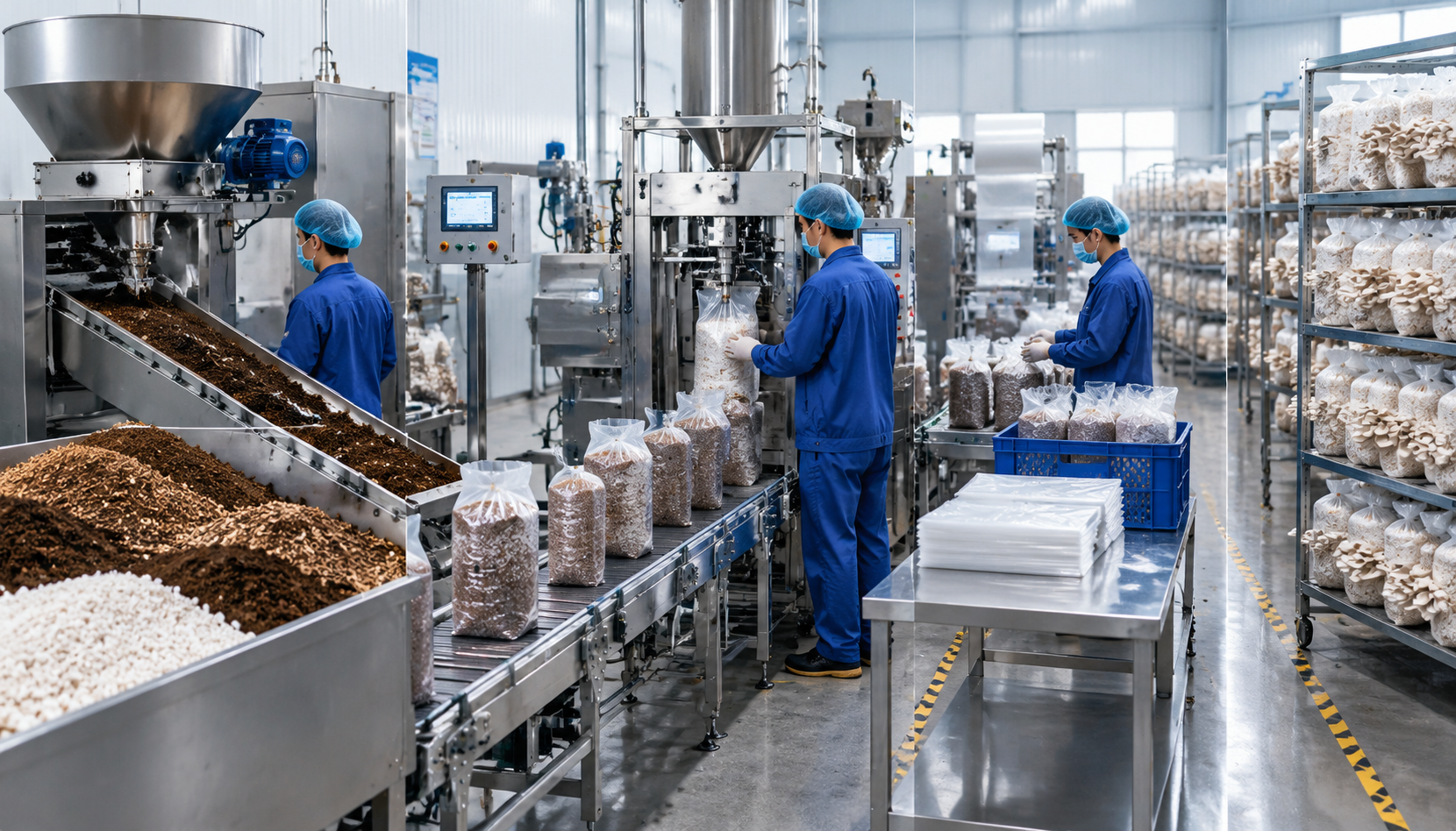
Executing an efficient preparation workflow ensures low contamination rates and uniform block density throughout the production facility. The standard industrial workflow proceeds through distinct operational stages:
- Raw Material Sizing: Sift and process hardwood logs or lumber mill cutoffs using a heavy-duty sawdust crusher to achieve consistent particle granulation (typically 1mm to 3mm).
- Dry Blending: Thoroughly dry-mix hardwood sawdust, wheat bran, and mineral supplements in a horizontal substrate mixer to eliminate clump formation.
- Hydration: Add metered water to the dry mix until the target 60%–65% moisture level is reached, verifying consistency via moisture meters.
- Bagging: Pack the hydrated substrate into micro-filter polypropylene cultivation bags using automatic or semi-automatic bagging machinery to maintain consistent packing density and neck sealing.
- Sterilization: Sterilize bagged substrate in industrial autoclaves or atmospheric steam chambers at 100°C–121°C for specified holding times to eliminate competing microorganisms.
- Cooling and Inoculation: Cool bags below 25°C in clean-air zones before introducing disease-free shiitake grain or liquid spawn.
6. Formula Selection Checklist and FAQs
When finalizing a substrate strategy for a commercial shiitake operation, evaluate your facility against the following practical decision criteria:
- Have you verified the wood source is free from chemical treatments, paints, and conifer (softwood) contamination?
- Does your mixing equipment achieve complete homogeneity of bran and gypsum to prevent localized nutrient hot spots?
- Are your sterilization protocols capable of neutralizing endospore-forming bacteria in heavily supplemented (high-bran) formulas?
- Does your chosen shiitake strain match the decomposition speed and thermal tolerance of your selected hardwood substrate?
Frequently Asked Questions
Can I grow shiitake mushrooms on pure sawdust without bran supplements?
Yes, but mycelial colonization will be extremely slow, and total biological efficiency will drop significantly. Supplements are necessary for commercial productivity.
Why is my shiitake substrate turning green after sterilization?
Green mold usually indicates either insufficient sterilization times, poor bag sealing, or excessive nitrogen ratios that encourage competitive weed fungi.
To explore integrated equipment solutions for large-scale shiitake farming—including substrate crushing systems, industrial mixers, and automated bagging lines—visit our core production solutions and machinery catalog.
If you have more questions, write to us
Recommend News
How to Grow Lion’s Mane Mushrooms: A Commercial Bag-Cultivation Guide
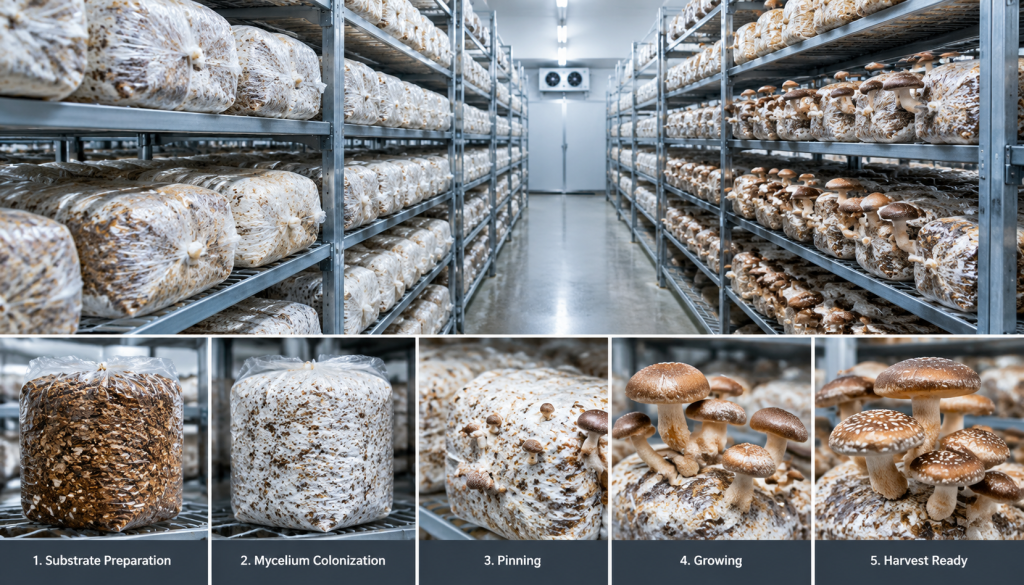
Shiitake Mushroom Growth Stages: Spawn Run, Browning, Fruiting, and Harvest
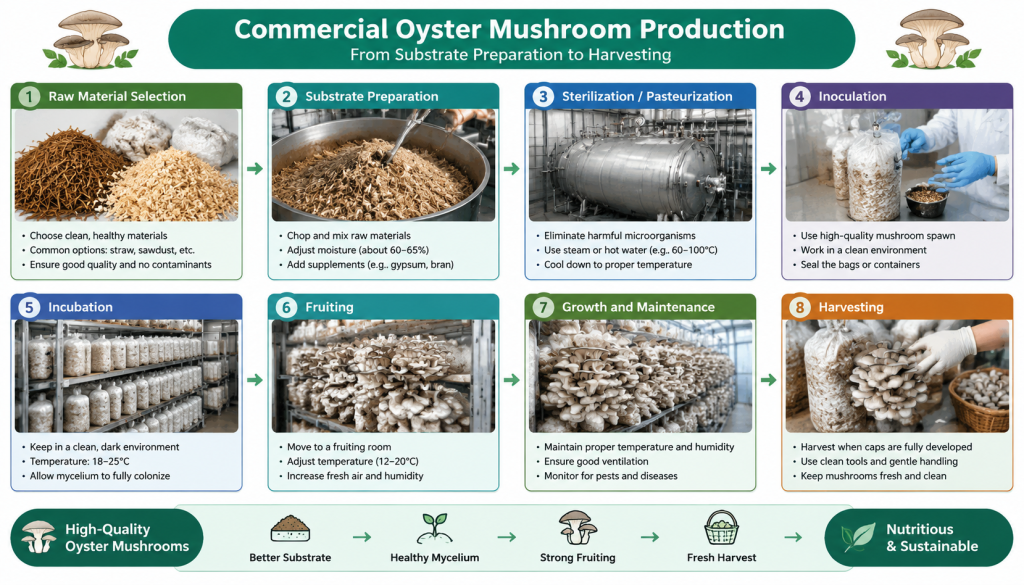
How to Grow Oyster Mushrooms Commercially: A Step-by-Step Production Guide
NTU Singapore Partners with Japanese Firm to Develop Fungal Fermentation Technology for High-value Upcycling of Okara
Agri-tech Empowers Specialty Farming: Indian Farmers Achieve Steady Income Growth Through the Edible-mushroom Industry
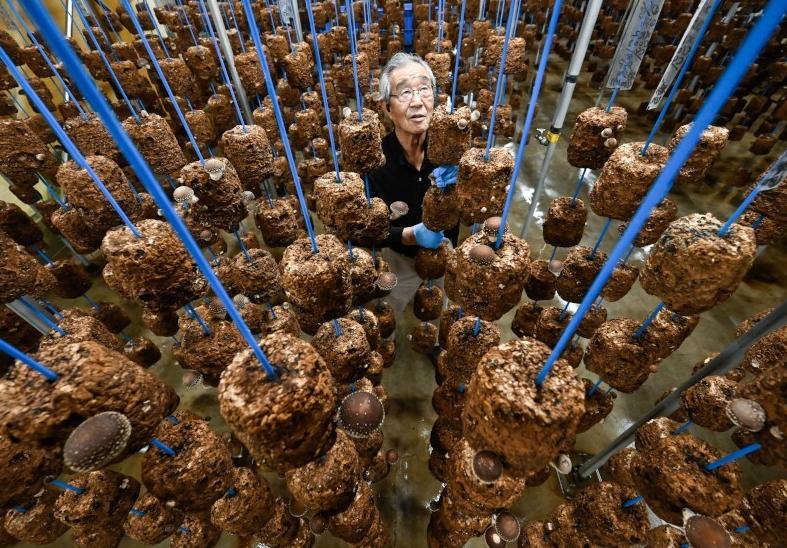
New Innovative Shiitake Cultivation Technology in Morioka, Japan Improves Quality and Production Efficiency
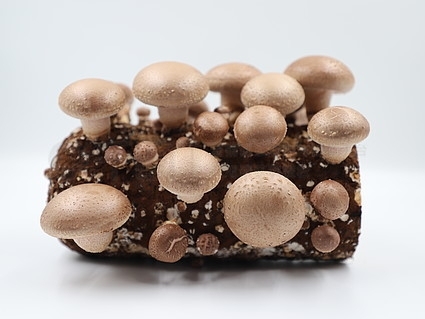
Shiitake Mushroom Spawn Run Guide
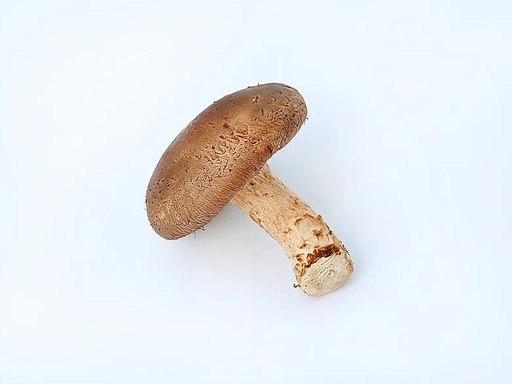
How to Preserve and Process Shiitake Mushrooms: A Practical Guide