










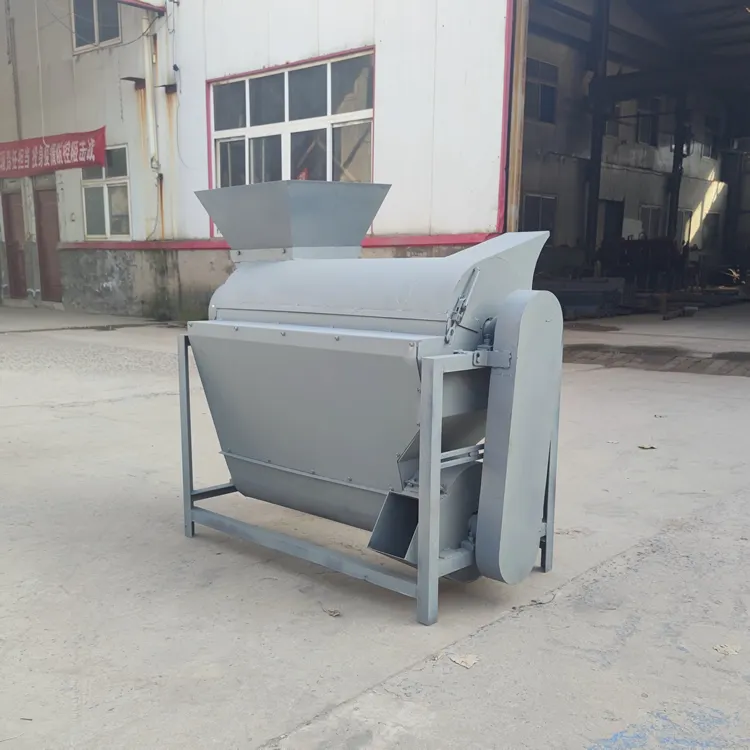
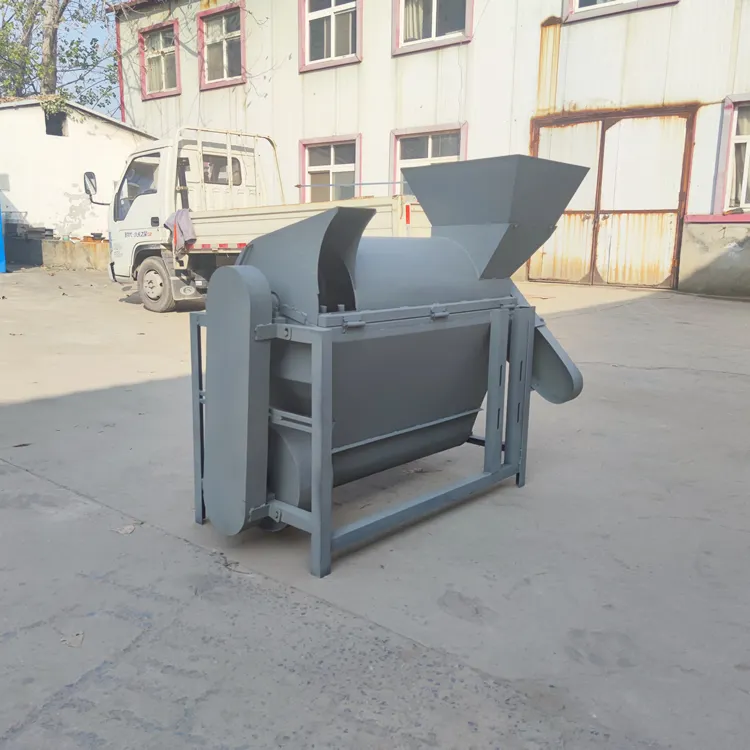
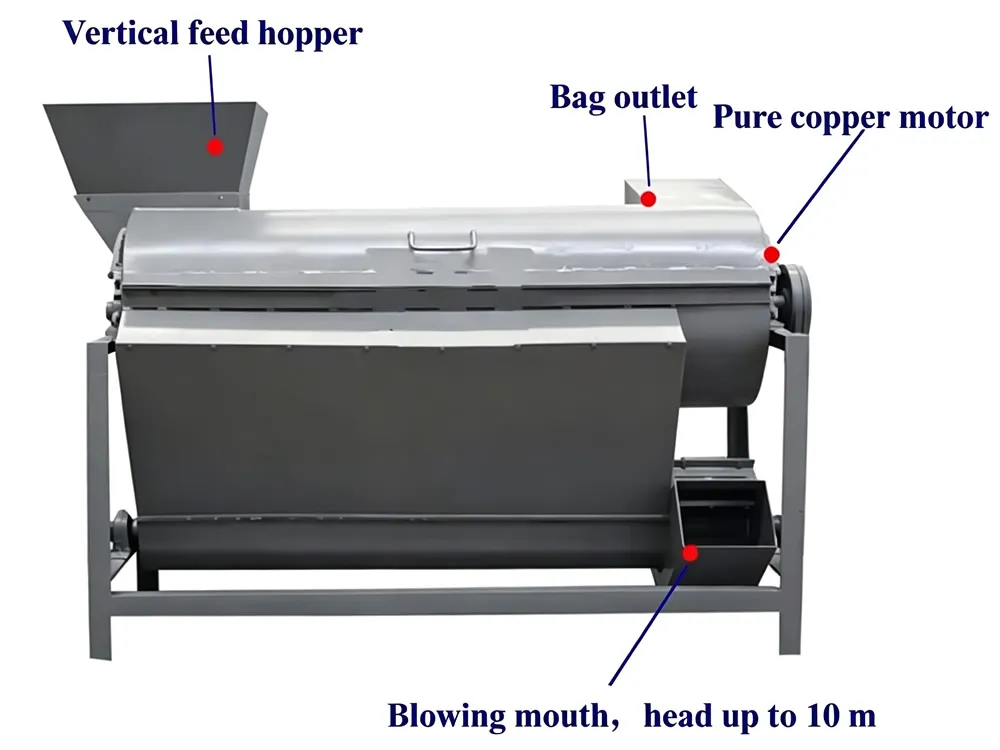
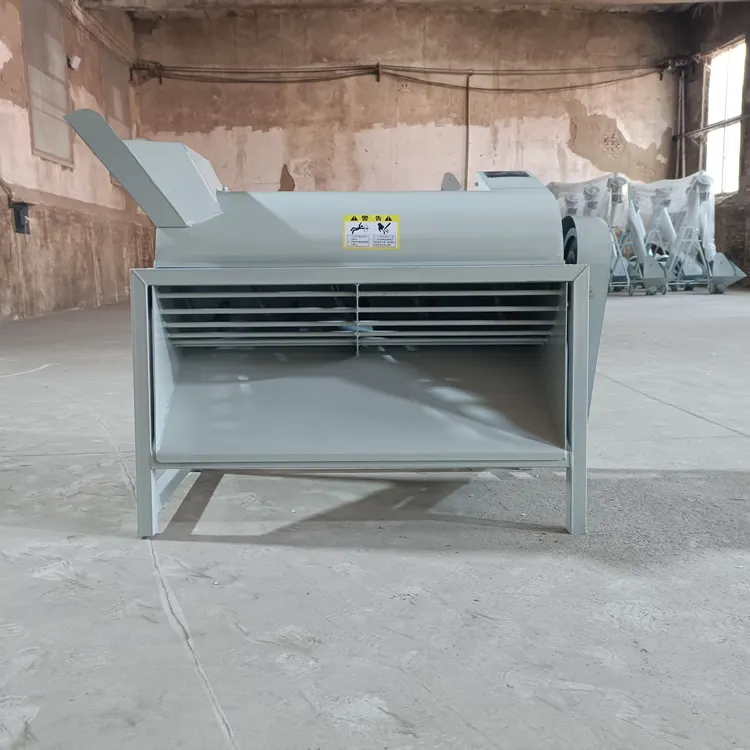
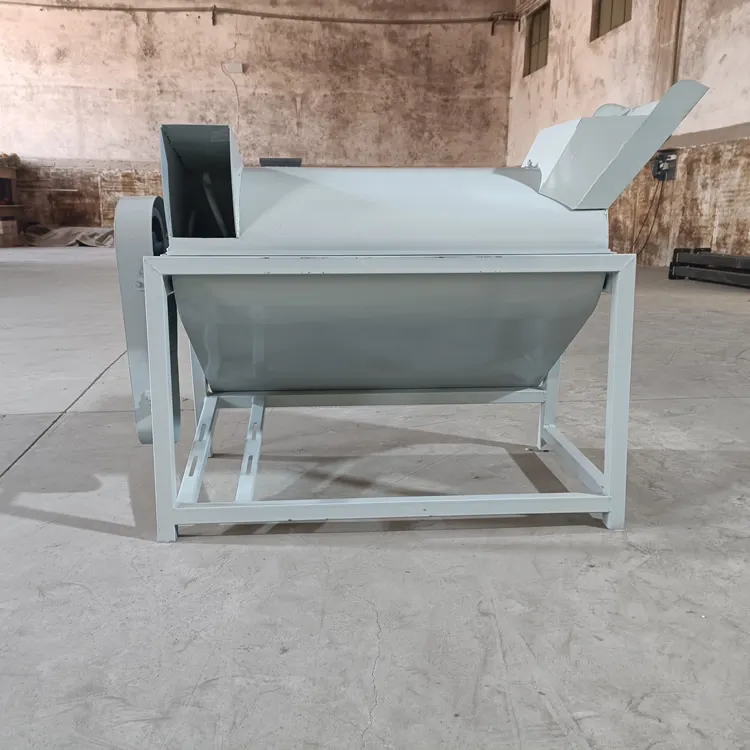
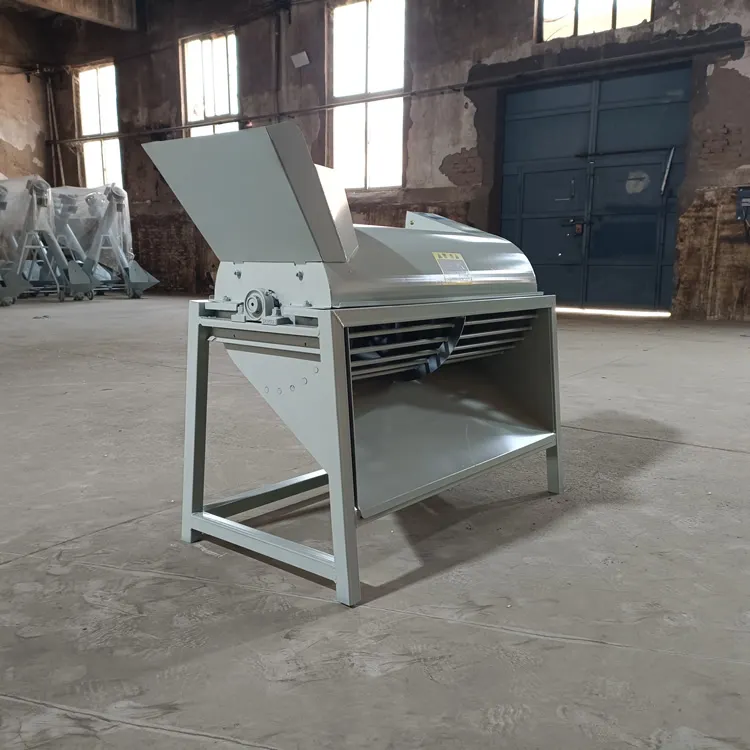
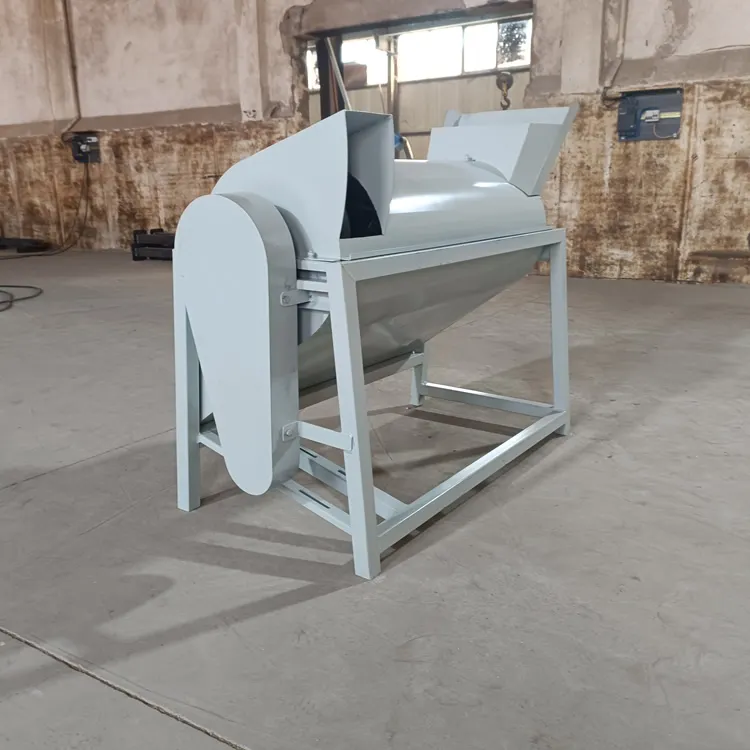
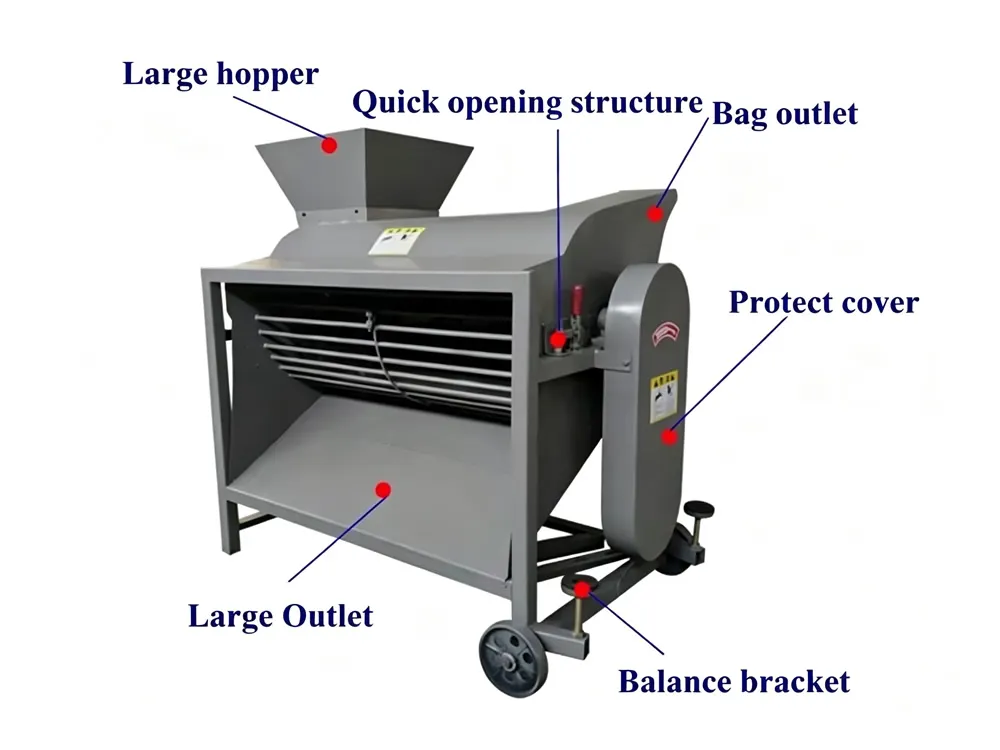
Small Bag-Stripping Machine for Mushroom Cultivation Waste Recycling (Mushroom Bag Separator)
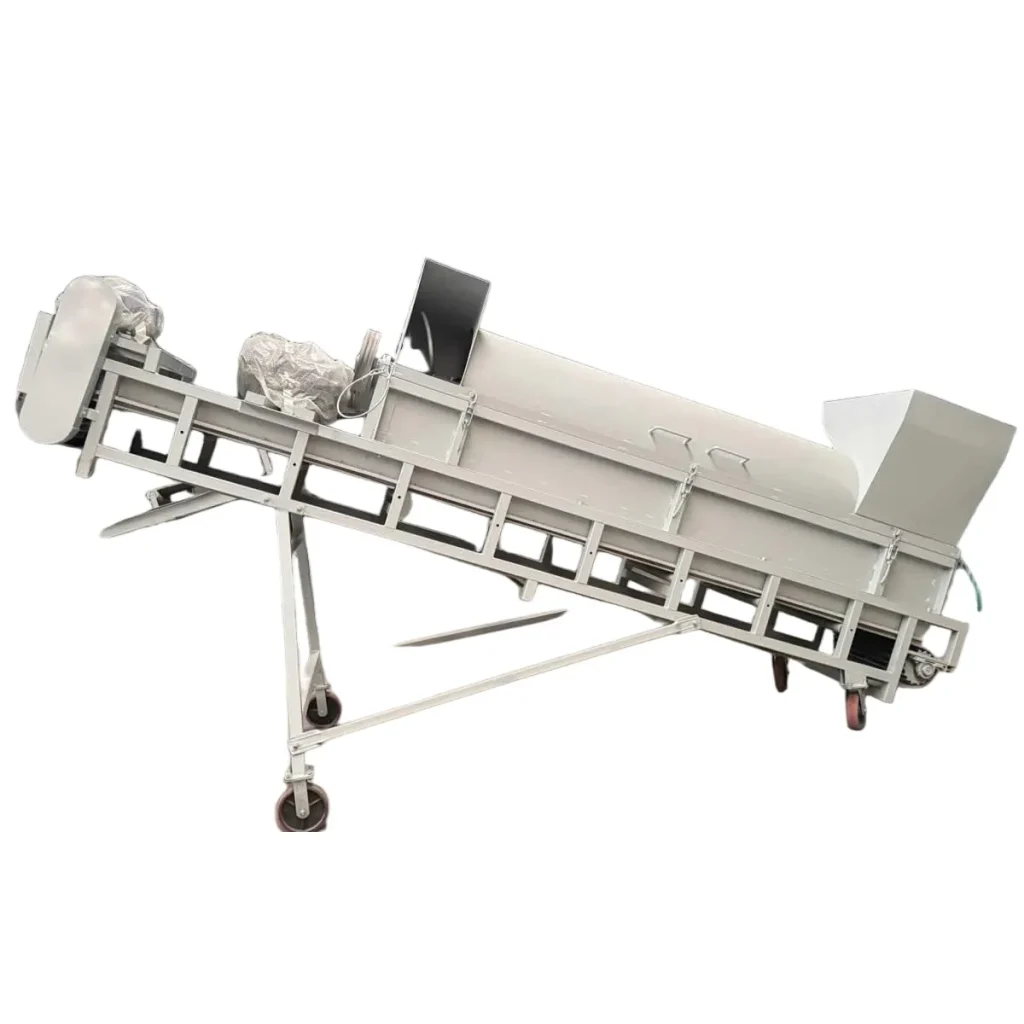
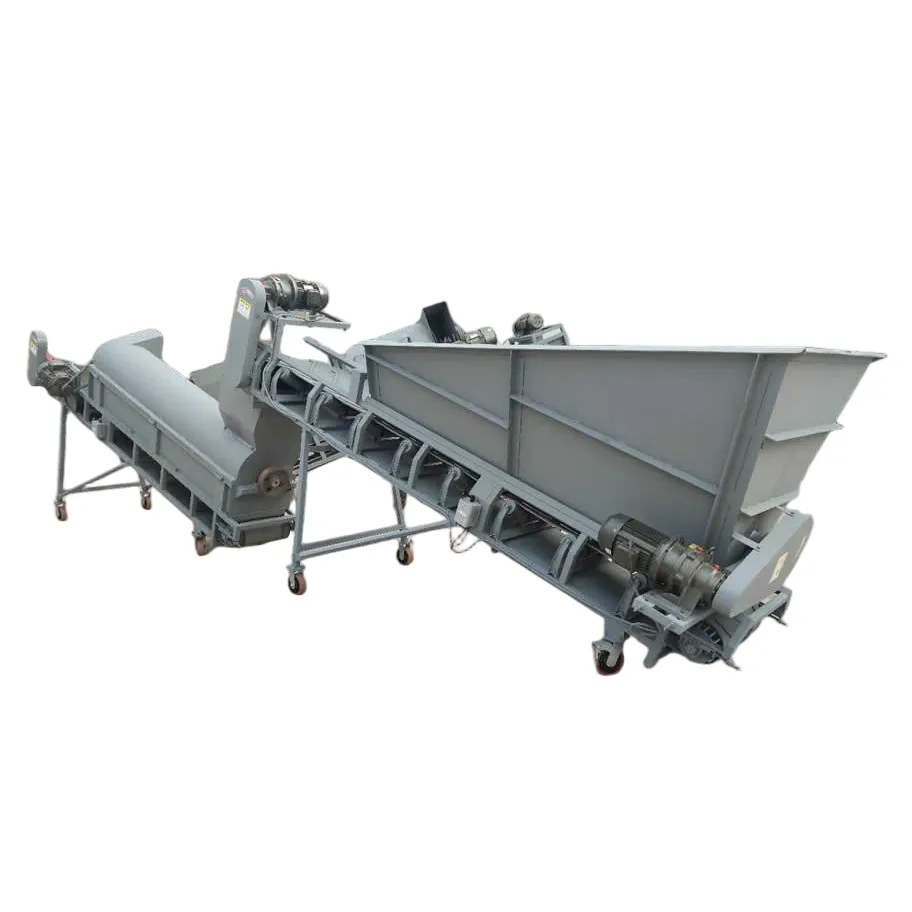
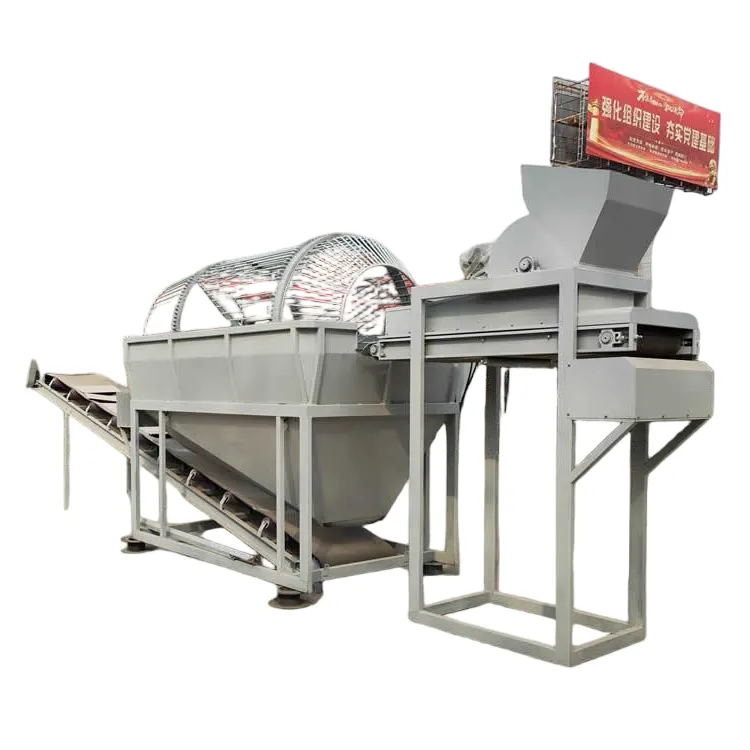
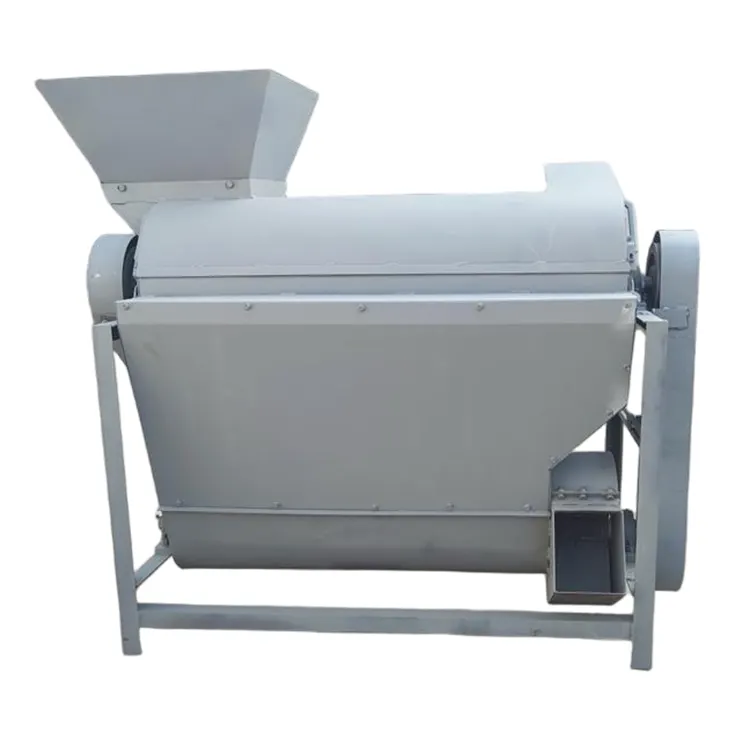
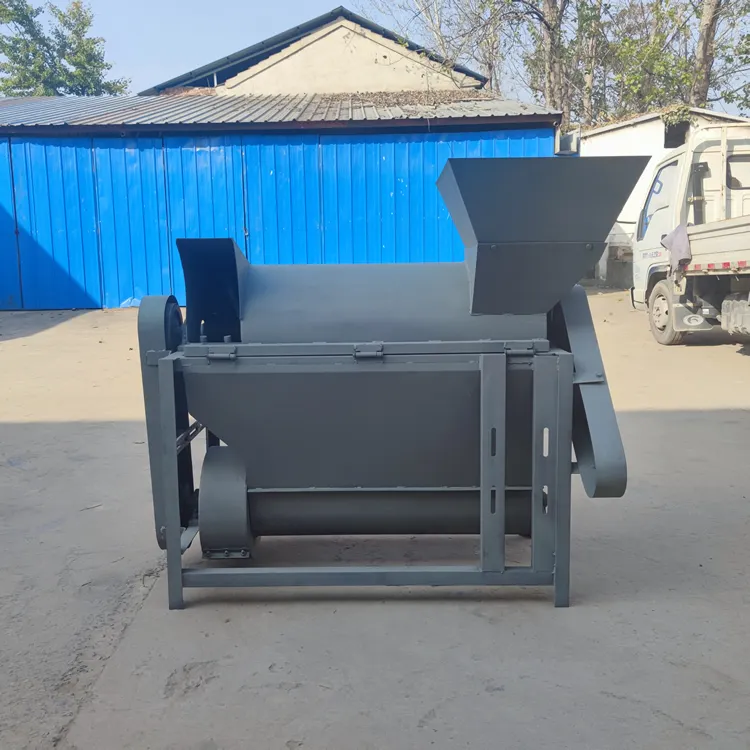
El diámetro de trabajo de 2 m de la BRMXH4000B and BRMXH3000A Small Bag-Stripping Machines are specialized recycling equipment for edible mushroom farms, designed to crush used mushroom bags and separate plastic bags from spent mushroom substrate, enabling waste substrate reuse, reducing labor costs, and supporting environmentally friendly mushroom production.
Especificaciones Clave
|
Modelo |
BRMXH4000B |
BRMXH3000A |
|
Tipo de Equipo |
Small Bag-Stripping Machine |
Self-Spraying Bag-Stripping Machine |
|
Función principal |
Mushroom bag crushing and material-bag separation |
Mushroom bag crushing and material-bag separation |
|
Aplicación |
Waste mushroom bags recycling |
Waste mushroom bags recycling |
|
Potencia |
3 kW |
3 kW |
|
Voltaje |
220V / 380V |
220V / 380V |
|
Processing Capacity |
4000 bags/hour |
2000-3000 bags/hour |
|
Machine Weight |
85 kg |
150 kg |
|
Dimensiones |
1700 × 620 × 850 mm |
1200 × 800 × 1200 mm |
|
Processing Method |
Crushing + separation |
Crushing + separation + spraying function |
|
Operation Mode |
Automatic feeding operation |
Automatic feeding operation |
|
Main Advantage |
High efficiency, compact structure |
Stable separation performance, flexible application |
Descripción del Producto
El diámetro de trabajo de 2 m de la Small Bag-Stripping Machine is an important recycling equipment for modern edible mushroom farms. It is mainly used to process discarded mushroom cultivation bags and contaminated mushroom bags after cultivation, separating plastic bags from spent mushroom substrate through crushing and separation technology.
During mushroom production, a large number of cultivation bags are consumed every day. After harvesting, these used mushroom bags usually contain residual substrate materials and plastic film. Traditional manual separation requires significant labor and is inefficient, especially for medium and large mushroom factories.
The BRMXH4000B and BRMXH3000A provide an automated solution by combining feeding, crushing, and material-bag separation processes into one machine. The equipment breaks the used mushroom bags and separates the plastic bags from the organic substrate, making the waste materials easier to handle and recycle.
The separated spent mushroom substrate can be further processed and reused as:
- Organic fertilizer raw material
- Soil improvement material
- Composting material
- Agricultural recycling resources
The plastic bags can be collected separately for appropriate disposal or recycling.
El diámetro de trabajo de 2 m de la BRMXH4000B features a compact structure and high processing efficiency, reaching up to 4000 bags per hour, making it suitable for mushroom farms requiring high-volume waste treatment.
El diámetro de trabajo de 2 m de la BRMXH3000A self-spraying bag-stripping machine provides a processing capacity of 2000-3000 bags per hour and is designed for stable operation in different production environments.
Both models help mushroom growers improve environmental management, reduce manual labor requirements, and create a more sustainable mushroom production system.
Principio de Funcionamiento
Feeding Used Mushroom Bags
Discarded mushroom bags or contaminated mushroom bags are placed into the feeding inlet.
The equipment can process:
- Used cultivation bags after harvesting
- Contaminated mushroom bags
- Waste substrate bags
Crushing Process
The feeding system transfers the mushroom bags into the crushing chamber.
Inside the machine:
- Rotating components break the plastic bags
- Substrate materials are loosened
- The bag structure is separated from the cultivation material
This process improves separation efficiency and reduces manual handling.
Material and Plastic Separation
After crushing, the mixture enters the separation system.
The equipment separates:
- Spent mushroom substrate
- Plastic cultivation bags
The separated substrate can be collected for recycling, while plastic waste is discharged separately.
Waste Material Collection
The processed materials are collected through different outlets.
The spent substrate can be transported to composting or fertilizer production processes.
Continuous Automatic Operation
The machine continuously processes incoming waste mushroom bags.
Operators only need to supply materials and monitor equipment operation.
Materias primas adecuadas y tipos de hongos
Suitable Materials
Incluyendo:
- Spent mushroom substrate bags
- Contaminated cultivation bags
- Used plastic mushroom bags
- Waste mushroom blocks
The separated substrate can be reused for:
- Organic fertilizer production
- Compost production
- Agricultural soil improvement
Suitable Mushroom Species
Hongo ostra (Pleurotus ostreatus)
Large-scale oyster mushroom farms generate high volumes of used substrate bags, making recycling equipment highly valuable.
Hongo ostra rey (Pleurotus eryngii)
Suitable for commercial bag cultivation waste processing.
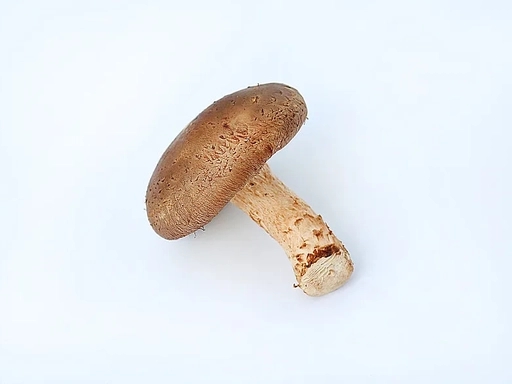
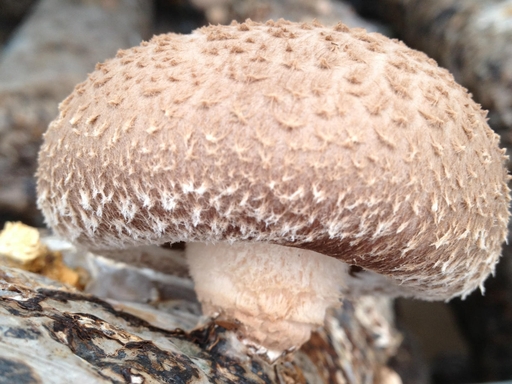
Hongo shiitake (Lentinula edodes)
Processes spent sawdust-based cultivation bags.
Oreja de Judas (Auricularia auricula-judae)
Suitable for short cultivation bag recycling.
Enoki Mushroom and Other Edible Fungi
Applicable to various bag cultivation systems.
Capacidad / Escala de Producción
BRMXH4000B
Processing capacity:
Up to 4000 bags/hour
Adecuada para:
- Large mushroom farms
- Centralized waste treatment facilities
- High-volume cultivation operations
BRMXH3000A
Processing capacity:
2000-3000 bags/hour
Adecuada para:
- Granjas de hongos pequeñas y medianas
- Recycling workshops
- Flexible production environments
The machines help mushroom factories achieve:
✔ Faster waste processing
✔ Reduced manual labor
✔ Improved recycling efficiency
✔ Cleaner production environment
✔ Better utilization of spent substrate
Nivel de automatización
The Small Bag-Stripping Machine provides a high level of mechanical automation.
Las funciones de automatización incluyen:
✔ Automatic feeding
✔ Automatic crushing
✔ Automatic bag-material separation
✔ Continuous operation capability
Operators mainly need to:
- Feed waste mushroom bags
- Monitor operation
- Collect separated materials
Integración con la línea de producción de hongos
Conexión con equipos anteriores
Before waste recycling, it can connect with:
Mushroom Cultivation Equipment
- Mushroom growing shelves
- Mushroom cultivation rooms
- Harvesting systems
Proceso de producción:
Mushroom Cultivation → Harvesting → Waste Mushroom Bags → Bag-Stripping
Conexión con equipos posteriores
After separation, it can connect with:
Organic Waste Processing Equipment
- Composting equipment
- Organic fertilizer production equipment
- Substrate recycling systems
Complete recycling process:
Used Mushroom Bags → Crushing → Bag Separation → Substrate Recycling → Organic Fertilizer Production
Servicio y Preguntas Frecuentes
Instalación y servicio
Instalación y puesta en marcha
Los servicios incluyen:
- Guía para la instalación de equipos
- Production layout suggestions
- Initial machine testing
Capacitación de operadores
La capacitación incluye:
- Procedimientos de operación del equipo
- Feeding methods
- Daily inspection
- Requisitos de operación segura
Suministro de piezas de repuesto
Servicios disponibles:
- Suministro de repuestos originales
- Wearing parts replacement
- Guía de mantenimiento
Soporte técnico
El soporte incluye:
- Asistencia técnica remota
- Equipment troubleshooting
- Operation optimization
Servicio posventa
Ofrecemos:
- Long-term technical consultation
- Soporte de mantenimiento
- Recycling system improvement suggestions
Preguntas frecuentes
The separated substrate can be reused for organic fertilizer production, composting, or soil improvement applications.
It can process used bags from oyster mushroom, king oyster mushroom, shiitake mushroom, black fungus, enoki mushroom, and other bag-grown edible fungi.
BRMXH4000B focuses on higher processing efficiency with up to 4000 bags/hour capacity, while BRMXH3000A provides 2000-3000 bags/hour capacity with a self-spraying design.
The machine is designed to crush and separate the main components of waste mushroom bags, improving recycling efficiency and reducing manual separation work.
Yes. Different models can meet the needs of small workshops, medium farms, and large-scale mushroom production facilities.